Understanding the Strategic Purpose of SBA Set-Asides
In federal contracting for small businesses, SBA set-asides refer to contracts that the government reserves exclusively for qualified small businesses or those in designated socio-economic categories. By limiting competition to only small firms, set-asides help level the playing field and enable small companies to win government contract opportunities that they might otherwise lose to larger corporations. In fact, U.S. policy mandates that a significant portion of federal contracting dollars be awarded to small businesses each year (23% or more), with specific targets for various socio-economic groups. This is achieved through mechanisms like competitive set-asides and even sole source awards for eligible firms.
One key reason these set-asides matter is the “Rule of Two.” Under the SBA’s Rule of Two, if market research shows at least two small businesses can perform a contract at a fair price, the solicitation must be set aside for small businesses. Moreover, all federal acquisitions below the Simplified Acquisition Threshold (approximately $250k) are automatically set aside for small businesses by default. These policies ensure that small firms get a fair share of federal procurement and that agencies meet annual small business goals.
Additionally, the SBA administers several socio-economic certification programs that enhance small business access to contracts. These include programs for businesses owned by disadvantaged individuals, women, service-disabled veterans, and those in underutilized areas. Government agencies have statutory goals for each category (for example, 5% of contract dollars to Women-Owned Small Businesses and 5% to Service-Disabled Veteran firms). By utilizing set-asides, agencies can achieve these targets, and small businesses in these groups get a foot in the door of federal contracting.
Overview of SBA Set-Aside Programs
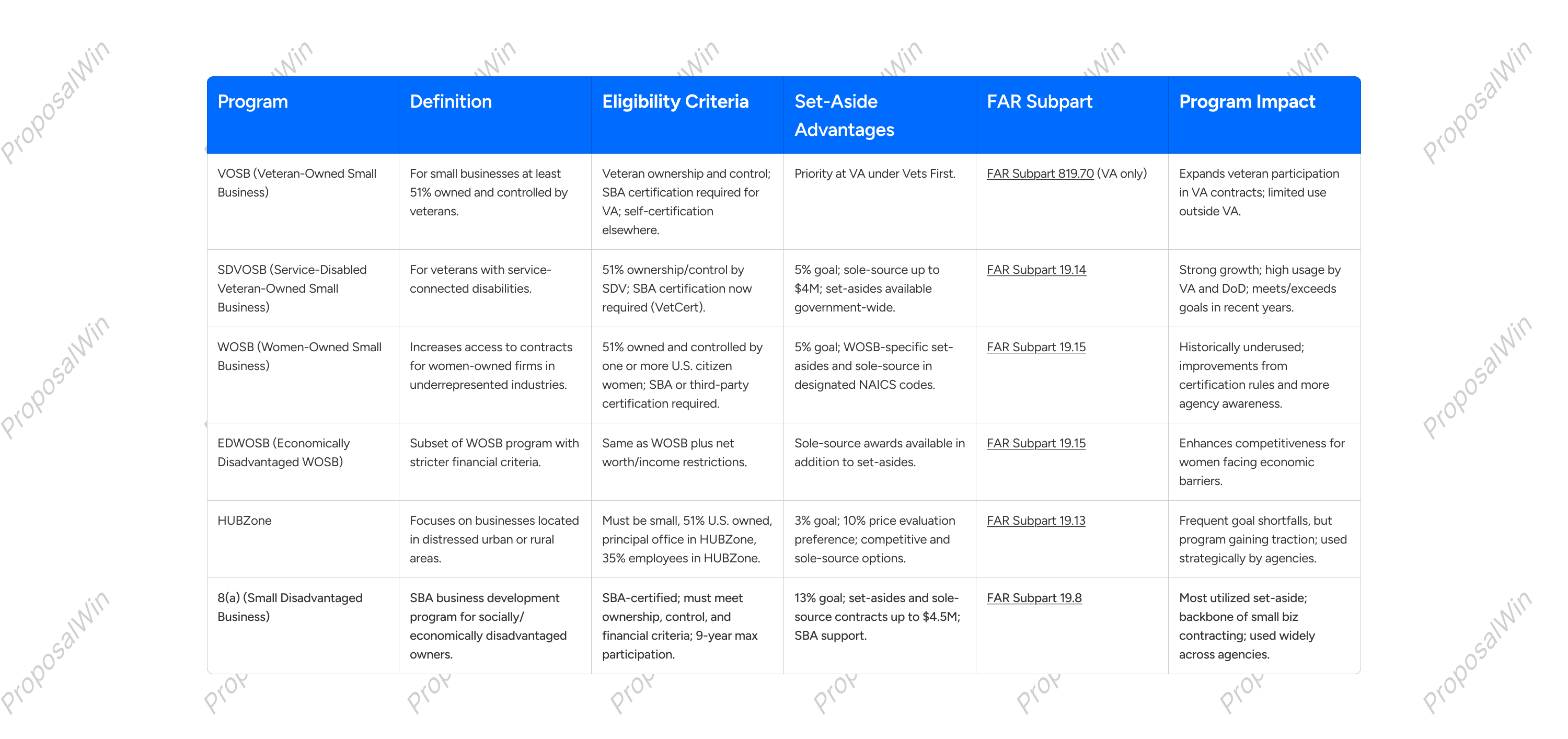
Not all small businesses are the same. The SBA recognizes several categories of small businesses for set-aside contracts, each with its own eligibility criteria and unique benefits. The main SBA socio-economic set-aside programs are:
8(a) Business Development Program
The 8(a) Business Development Program is SBA’s flagship program for Small Disadvantaged Businesses (SDBs). It is a nine-year business development program created to help small firms owned by socially and economically disadvantaged individuals grow their capacity. Participants receive specialized training, counseling, and marketing assistance to compete more effectively in the federal marketplace.
A major benefit of 8(a) certification is access to exclusive contracts. Federal agencies can award 8(a) set-aside contracts that only 8(a)-certified firms can bid on, and they can even issue 8(a) sole-source contracts (up to $4.5 million, or $7 million for manufacturing) directly to an 8(a) firm without competition. To qualify, a business must be small and at least 51% owned and controlled by one or more individuals who are economically and socially disadvantaged. Participation is one-time only and limited to 9 years.
In FY 2024, small disadvantaged businesses (including 8(a) firms) won about $78.3 billion in federal prime contracts, underscoring the program’s importance in federal contracting.
HUBZone Program
The HUBZone Program targets small businesses in “Historically Underutilized Business Zones” — areas with high unemployment, low income, or other economic disadvantages. The government aims to award at least 3% of contracting dollars to HUBZone-certified businesses each year.
To be HUBZone-certified, a firm must be small, at least 51% owned by U.S. citizens, have its principal office located in a designated HUBZone, and ensure that at least 35% of its employees reside in HUBZone areas. HUBZone companies also receive a 10% price evaluation preference in full-and-open contract competitions. In FY 2024, HUBZone small businesses were awarded about $17.6 billion in contracts.
Women-Owned Small Business (WOSB) Program
The WOSB Federal Contract Program is designed to expand the participation of women entrepreneurs in federal procurement. The government strives to award at least 5% of prime contracting dollars to WOSBs each year. To qualify, a firm must be small and at least 51% owned and controlled by one or more women who are U.S. citizens. Since 2020, WOSB certification requires going through SBA’s certification process or an approved third-party certifier. In FY 2024, WOSBs received roughly $31.7 billion (about 4.97% of federal contract dollars).
Service-Disabled Veteran-Owned Small Business (SDVOSB) Program
The SDVOSB program aims to honor the service of disabled veterans by helping them become successful entrepreneurs. The government-wide goal is at least 5% of federal contracting dollars. In FY 2024, SDVOSBs received about 5.14% of contract dollars, totaling $32.8 billion — achieving the target for the first time since the goal was raised from 3% to 5%. As of January 2023, the SBA now manages all certifications for veteran-owned businesses through the Veteran Small Business Certification (VetCert) program.
FY 2024 Federal Contracting Highlights for Small Businesses
FY 2024 was a record-breaking year for small business participation in federal contracting. The federal government awarded approximately $183.5 billion in prime contracts to small businesses — about 28.8% of all federal contracting dollars, significantly exceeding the statutory 23% goal.
Small Disadvantaged Businesses (including 8(a) firms): ~$78.3 billion (12.3% of total). All-time high in dollar value, slightly short of the 13% aspirational goal.
Service-Disabled Veteran-Owned Small Businesses: ~$32.8 billion (5.14% of total). First time the raised 5% SDVOSB goal was fully met government-wide.
Women-Owned Small Businesses: ~$31.7 billion (4.97% of total). Just below the 5% goal, continuing a pattern from prior years.
HUBZone Small Businesses: ~$17.6 billion (2.75% of total). Below the 3% goal but up in dollar value compared to prior years.
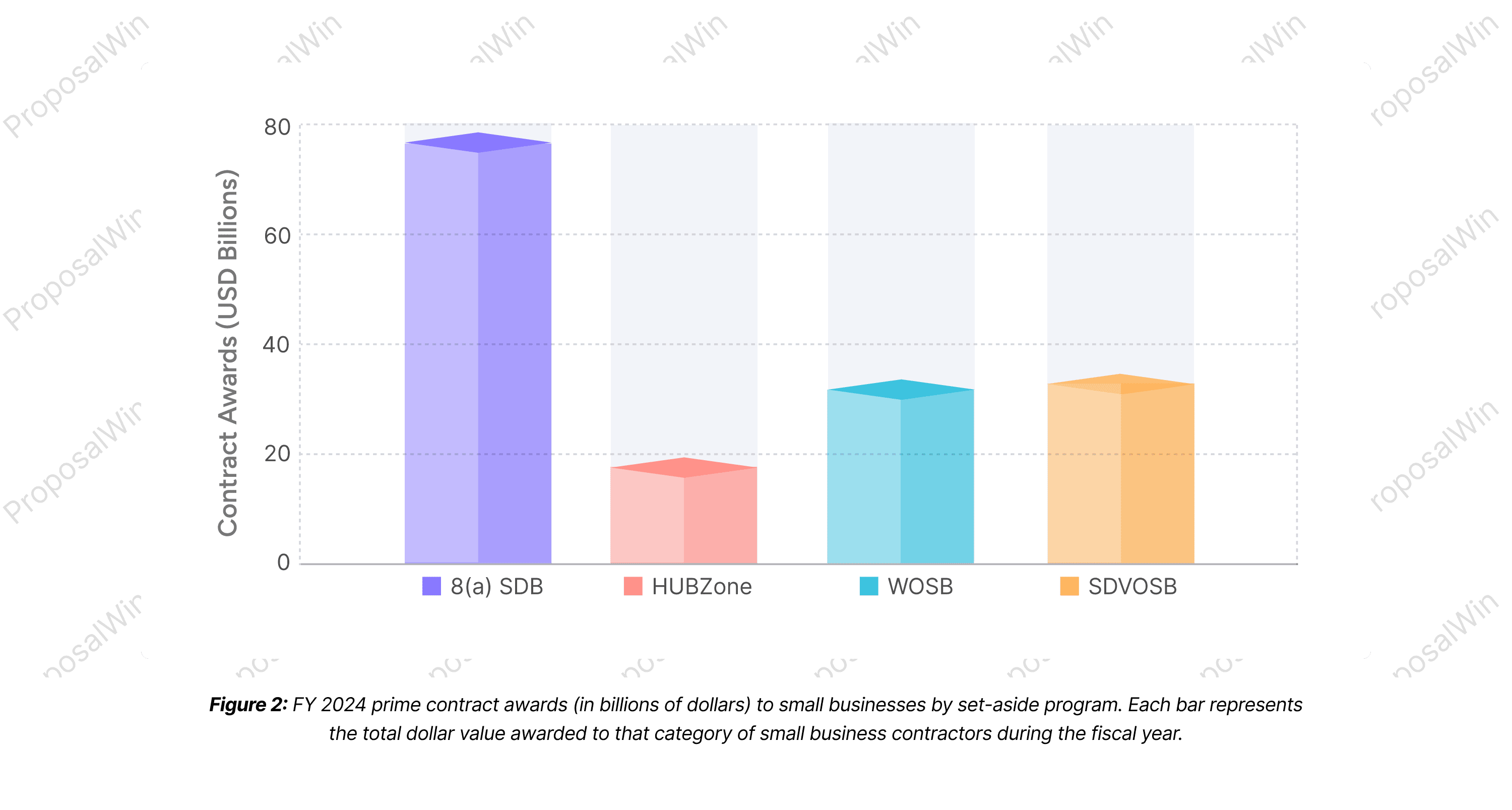
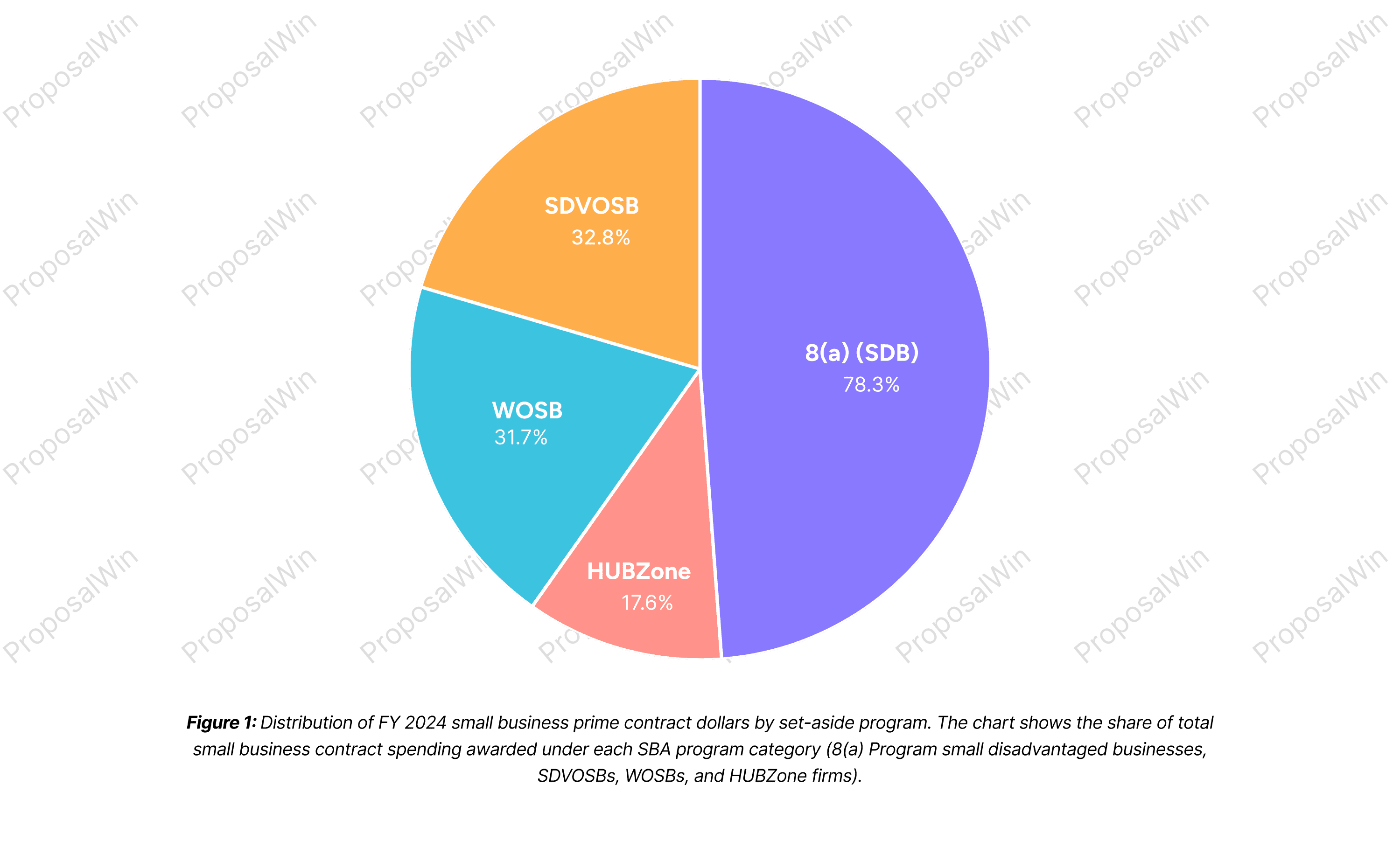
FY 2024 set a new record in dollars awarded, demonstrating the effectiveness of set-aside programs. However, the results also highlight areas for improvement: some goals (WOSB and HUBZone) were not fully met, suggesting agencies may increase efforts in those categories moving forward.
Leveraging SBA Set-Asides to Win Contracts
Participating in SBA set-aside programs can significantly boost a small business’s chances of winning federal contracts, but success still requires strategy. Here are actionable tips:
Get Certified and Stay Current. Ensure your business obtains all relevant SBA socio-economic certifications you qualify for. Use the SBA’s Certify website to apply and keep your certification active.
Update Your SAM Profile with Keywords. Include certifications like “8(a) certified,” “HUBZone small business,” “WOSB,” or “SDVOSB” in your capability narrative so acquisition officials can easily find your company.
Research Set-Aside Opportunities. On SAM.gov, filter opportunities by set-aside type. Focus on government contract opportunities where competition is limited to businesses like yours — your odds of winning are much higher in a smaller pool.
Market Your Certifications. Actively market your status as an SBA-certified firm. Mention it in capability statements, your website, and during networking events. Reach out to agency Small Business Specialists and let them know you are certified and ready to perform.
Leverage Sole-Source Authorities. 8(a), HUBZone, SDVOSB, and WOSB programs all have sole-source contract options. While you generally can’t force an agency to sole-source to you, you can market to program managers and highlight that awarding to your firm can be done quickly under those authorities.
Build Past Performance Through “Quick Win” Contracts. Micro-purchases (under $10k) and simplified acquisitions (<$250k) are often set aside for small businesses and involve minimal paperwork. Winning a few of these builds your track record for larger opportunities.
Team Up Strategically. If a contract is too large for your company alone, use teaming arrangements or joint ventures. Under SBA’s rules, a joint venture with the relevant certification can qualify for set-aside contracts as long as it meets SBA requirements.
Target Budget Allocation by SBA Set-Aside Category
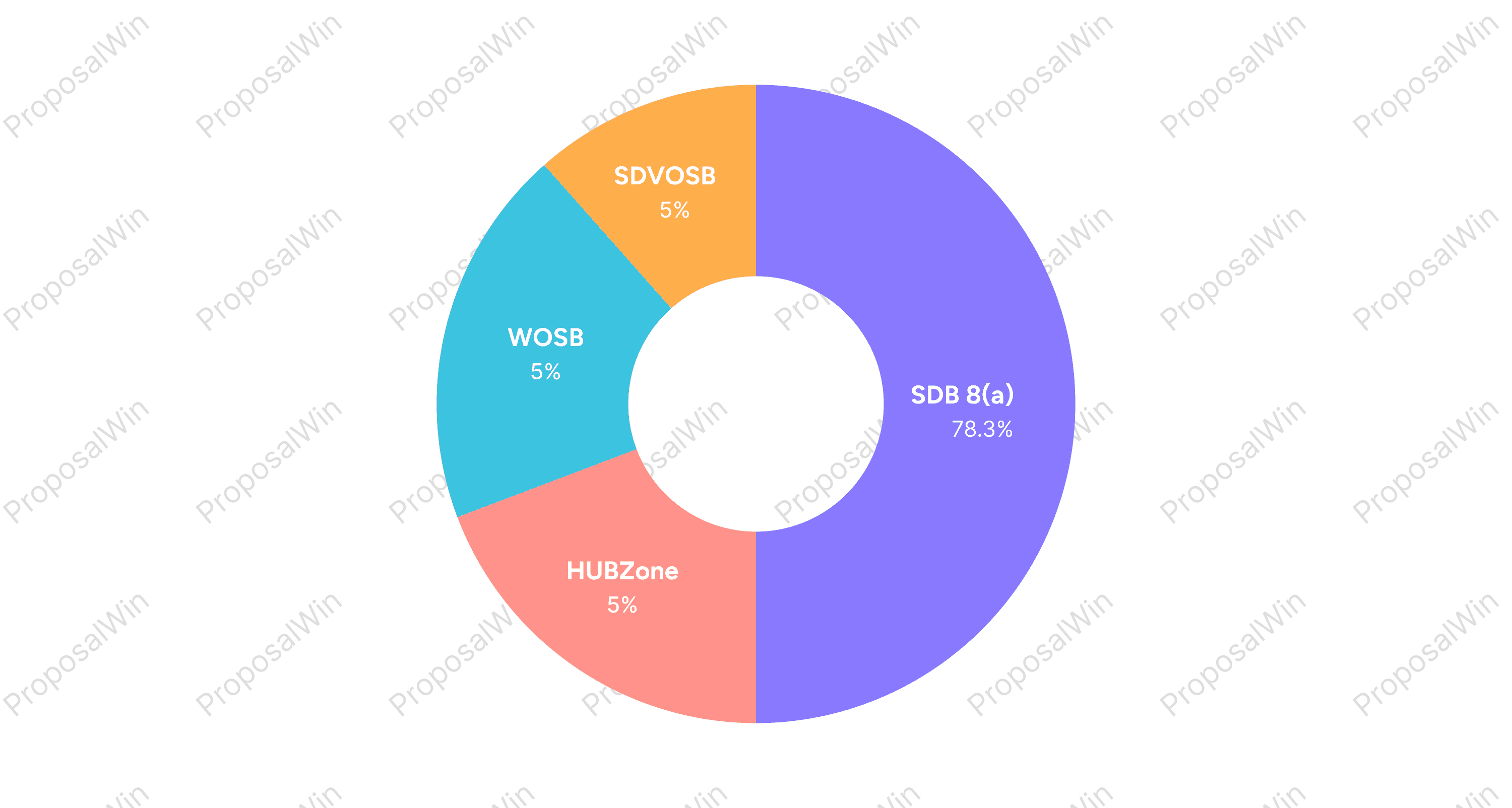
This pie chart shows the U.S. federal government’s statutory contracting goals by SBA set-aside program: 13% to Small Disadvantaged Businesses (8a), 5% each to Women-Owned and Service-Disabled Veteran-Owned Small Businesses, and 3% to HUBZone-certified firms.
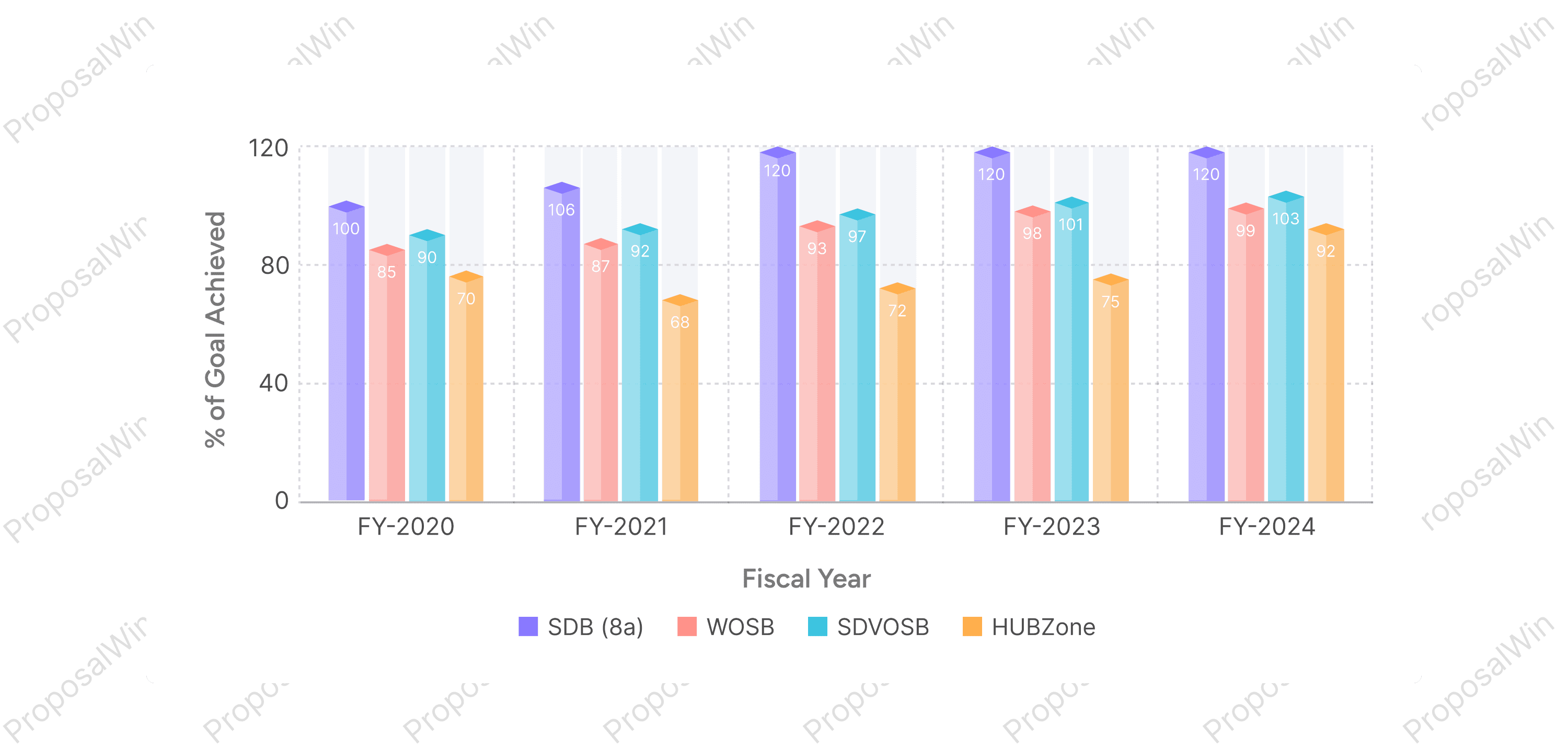
This grouped bar chart illustrates which SBA set-aside programs met or fell short of their government contracting goals between FY2020 and FY2024. HUBZone and WOSB programs frequently underperformed.
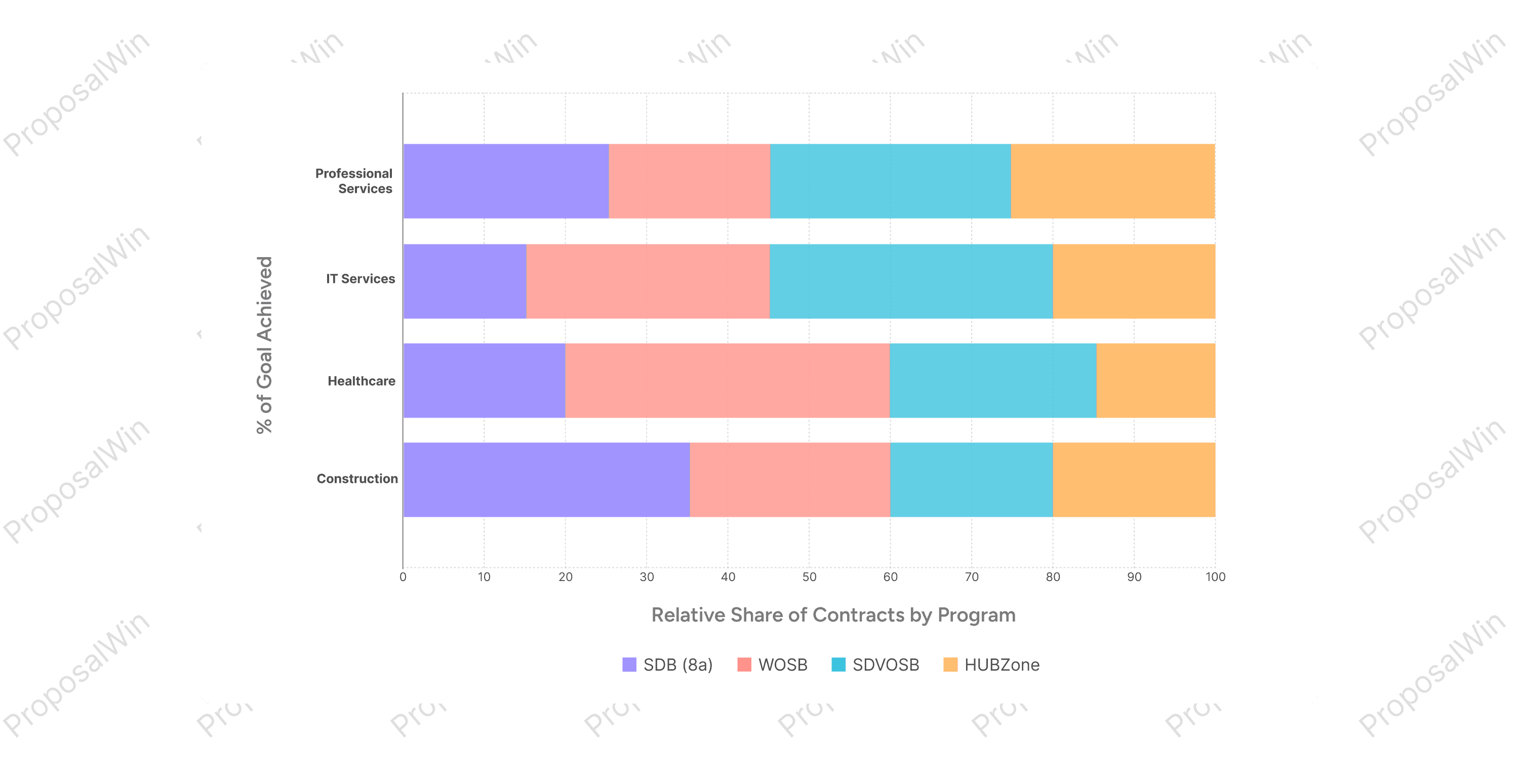
This illustrative horizontal bar chart estimates which industries are most active for each SBA set-aside category. 8(a) and HUBZone awards are more common in construction, while WOSB and SDVOSB contracts tend to appear more in healthcare and IT.